
You’ve found a contractor for a crucial task: building a website, setting up ads, or providing technical support. You’ve discussed timelines and budgets, and they’ve sent you an agreement. All that’s left is to sign and start working. This is exactly when most entrepreneurs make a critical mistake—they sign without reviewing the document. Months later, they face missed deadlines, bloated costs, and damaged relationships.
Contract review isn’t about mistrust; it’s about professional business hygiene. It’s your only legal protection if things go wrong. Fortunately, you don’t need to be a lawyer to weed out the most dangerous risks. Modern tools like ai contract review make this task quick and understandable even for beginners. Here are three practical steps to protect your budget and your sanity.
Step 1. Achieve Crystal Clarity on Timelines and Scope of Work
The most common cause of conflict is mismatched expectations about what exactly needs to be done, when, and in what form. Vague wording gives the contractor room to maneuver and gives you a headache.
What to look for:
- Specifics instead of generalities. Instead of “develop a website,” the contract should have a detailed statement of work (SOW) or specifications as an integral appendix. Instead of “complete as soon as possible,” there should be a clear project deadline or specific milestones.
- The approval and revision process. The contract should answer: How many rounds of revisions are included in the price? How much time do you have to review each stage? What happens if you don’t provide feedback on time? Lack of these rules leads to endless revisions and mutual claims.
What to do:
If the contract contains phrases like “as agreed by the parties” or “within a reasonable time,” consider it a red flag. Before signing, turn all verbal agreements into written clauses or contract appendices.
Step 2. Scrutinize the Financial Terms: How, When, and What You Pay For
Financial risks in a contract are the most direct and painful. They can lead to a situation where you’ve already paid, but the work isn’t done, or where the final cost is multiples of the original estimate.
What to look for (and what it might look like):
| Risk in the Contract | Why It’s Dangerous for You | What It Should Be |
| 100% Upfront Payment | You lose all leverage. The contractor may delay deadlines or reduce quality. | Phased payments. For example: 30% deposit, 40% after design approval, 30% after final project delivery. |
| Non-Transparent Estimate | “Unexpected” additional charges appear for work you believed was included. | A detailed list of services and works with fixed costs. A clause stating that any additional work requires separate agreement and extra payment. |
| Lack of Warranty | Defects found after acceptance are fixed slowly or for an additional fee. | A stipulated warranty period for the work (e.g., 30-90 days) and the contractor’s obligation to fix errors at their own expense. |
What to do: Read the “Cost of Services,” “Payment Terms,” and “Liability of the Parties” sections as if your profit depends on it. Because it does.
Step 3. Define Liability and Exit Strategies
Imagine the work has stalled, the quality is unsatisfactory, and the contractor has stopped responding. Your contract is the instruction manual for this scenario. If it lacks the necessary paragraphs, you’re trapped.
What to look for:
- Termination clauses. Can you terminate the agreement if terms aren’t met? What is the notice period? Are there penalties for termination? The absence of a civilized “exit” option is a huge risk.
- The liability section. Find the “Limitation of Liability” clause. Your key task is to ensure the contractor’s liability is limited to the contract value. If this phrase is missing, you could be held liable for damages far exceeding the cost of the work in case of a serious error.
- Confidentiality and rights to the work product. Ensure the contract includes mutual confidentiality obligations. Also, verify that rights to the created product (design, code, text) transfer to you upon full payment.
How to Conduct a Review Quickly and Confidently? Automate the First Step
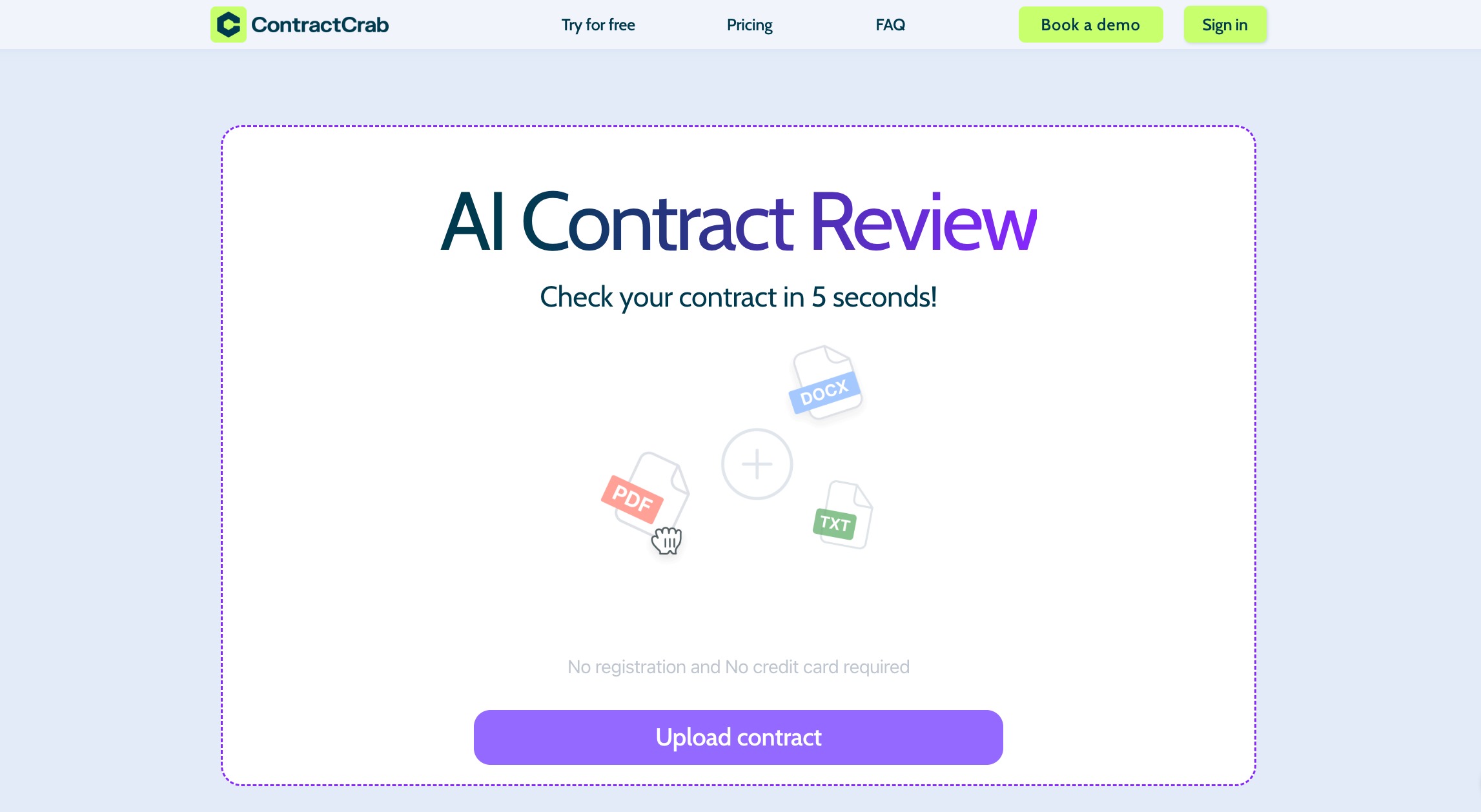
Following these three steps manually for every contract is a time-consuming task that requires intense focus. This is where technology comes to the rescue. The ai contract review service Contract Crab is designed to be your digital assistant.
Here’s how it works:
- You upload the agreement received from the contractor into the system.
- Artificial intelligence, trained on thousands of contracts, analyzes the text in minutes. It doesn’t just search for words; it understands the context and relationships between clauses.
- You receive a document with suggested amendments, highlighting risky areas: vague deadlines, unlimited contractor liability, predatory payment terms. Each risk is explained in simple language so you understand the business implications.
This approach doesn’t replace a lawyer for complex, multi-million dollar contracts. But it gives you confidence and saves time on 90% of routine review. You stop fearing complicated documents and enter negotiations clearly knowing which three points need to be fixed first. Try ai contract review by Contract Crab to sign your next agreement with peace of mind.
Key Takeaways
A contractor agreement isn’t bureaucracy; it’s a risk management tool. Spend an hour reviewing it to save thousands and months of fixing problems.
- Document all details. Turn verbal “understandings” into written clauses and appendices. The more specific, the better.
- Control the finances. Avoid full upfront payment, insist on a transparent estimate, and use phased payments.
- Plan your exit. Make sure you have a legal right to exit the agreement and that the contractor’s liability is limited.
Start small—apply these three steps to the next contract that lands on your desk. And to do it quickly and without stress, trust the initial analysis to artificial intelligence. Your budget and reputation are worth it.
Frequently Asked Questions (FAQ)
Is it necessary to hire a lawyer to review every contract?
Not for every one. For standard, lower-cost projects, your careful attention using this checklist and an AI-review service to catch major pitfalls is sufficient. A lawyer should be involved for complex, long-term, or high-budget contracts.
What should I do if the contractor refuses to make changes to their “standard” agreement?
This is a serious warning sign. A conscientious contractor is interested in clear and fair rules. A refusal to discuss reasonable amendments (like adding payment stages or limiting liability) is a reason to seriously question their reliability.
Do verbal agreements hold any weight if they’re not in the document?
In business, practically no. Proving them in a dispute will be extremely difficult. All key terms must be recorded in the contract text or its appendices.