Modern software rarely exists in isolation. Applications rely on third-party services, cloud platforms, microservices, and external data sources to deliver seamless digital experiences. As a result, understanding how different systems communicate has become a core competence for developers. API integration patterns provide structured ways to connect services efficiently, securely, and scalably across diverse environments.
TLDR: API integration patterns define how applications communicate with each other in scalable and maintainable ways. From simple request-response models to event-driven and message-based architectures, each pattern serves specific business and technical needs. Choosing the right integration strategy improves reliability, performance, and system flexibility. Developers who understand these patterns can design robust APIs that adapt to future growth.
Below is a comprehensive overview of the most important API integration patterns developers should know, including when and why to use each.
1. Point-to-Point Integration
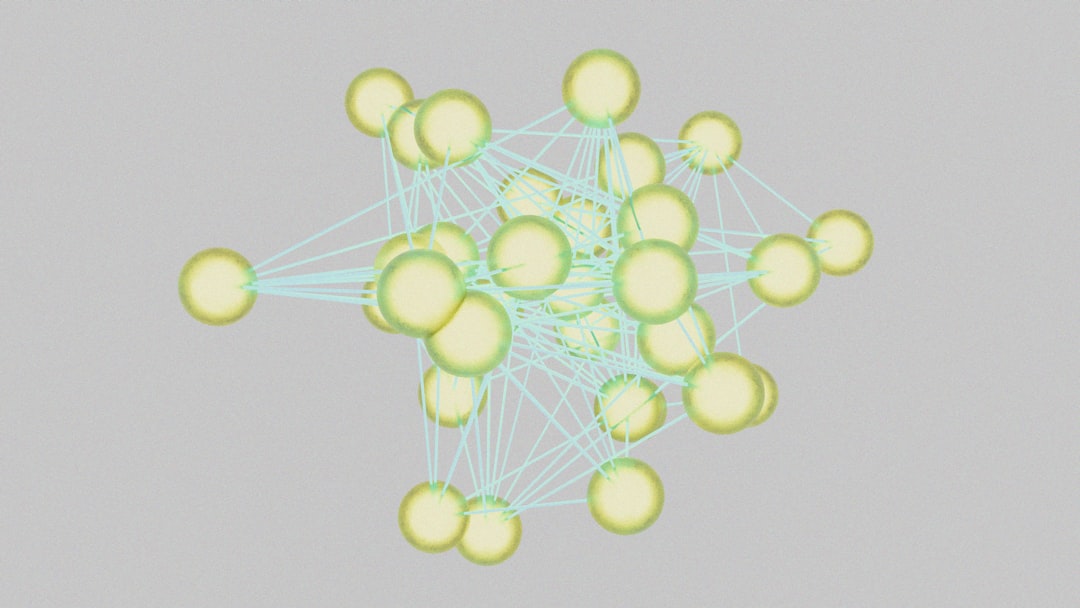
Point-to-point integration is the most straightforward approach. One system communicates directly with another using HTTP or similar protocols. It is often used in small-scale systems or early-stage projects.
How it works:
- One application sends a request directly to another.
- The receiving application processes the request and returns a response.
- No intermediaries are involved.
Advantages:
- Simple to implement
- Low latency
- Minimal infrastructure requirements
Disadvantages:
- Tight coupling between systems
- Difficult to scale
- Hard to maintain as integrations grow
This pattern works well for small systems but becomes fragile in complex enterprise environments.
2. API Gateway Pattern
The API Gateway acts as a single entry point for multiple backend services. It routes requests, handles authentication, rate limiting, and monitoring.

Key features:
- Request routing
- Load balancing
- Authentication and authorization
- Analytics and monitoring
Benefits:
- Reduces client complexity
- Centralizes security enforcement
- Supports microservices architecture
Common tools: AWS API Gateway, Kong, Apigee, Azure API Management.
This pattern is especially powerful in distributed systems where multiple microservices need unified exposure.
3. Request-Response Pattern
The request-response model is one of the most widely used API communication patterns. A client sends a request and waits for a response before continuing.
Characteristics:
- Synchronous communication
- Immediate feedback
- Often uses REST or GraphQL
Use cases:
- User authentication
- Fetching user profiles
- Processing payments
While easy to implement, synchronous APIs can block system resources if response times are high.
4. Event-Driven Integration
In an event-driven architecture, services communicate by emitting and reacting to events. Instead of calling each other directly, systems publish events to an event broker.
How it works:
- A service emits an event.
- An event broker (e.g., Kafka, RabbitMQ) distributes it.
- Subscribed services react independently.
Advantages:
- Loose coupling
- High scalability
- Better fault tolerance
Challenges:
- More complex debugging
- Requires event infrastructure
- Eventual consistency model
This pattern is ideal for high-traffic systems, e-commerce platforms, and real-time analytics.
5. Message Queue Pattern
The message queue pattern introduces a broker between systems. Messages are placed in a queue and processed asynchronously.
Core characteristics:
- Asynchronous communication
- Message persistence
- Retry mechanisms
Popular tools: RabbitMQ, Apache Kafka, Amazon SQS, Azure Service Bus.
This pattern improves resilience. If a service fails, messages remain in the queue until processing resumes.
6. Backend for Frontend (BFF) Pattern
Different client applications often require customized APIs. A Backend for Frontend (BFF) pattern creates separate backend layers tailored to specific frontends.
Example:
- Mobile app uses one BFF.
- Web app uses another BFF.
- Each optimizes data formatting and performance.
Benefits:
- Better performance optimization
- Reduced over-fetching of data
- Cleaner separation of client requirements
This approach is common in modern, multi-channel applications.
7. Aggregation Pattern
In distributed systems, clients may need data from multiple services. The aggregation pattern fetches data from several APIs and combines the results into a single response.
Process:
- The aggregator receives client request.
- It calls multiple backend services.
- It merges results and returns unified response.
This reduces client-side complexity but increases server-side orchestration logic.
Comparison of Common API Integration Tools
| Tool | Primary Use | Best For | Cloud Support |
|---|---|---|---|
| AWS API Gateway | API Management | Serverless and cloud-native apps | AWS |
| Kong | API Gateway | Microservices environments | Multi-cloud |
| Apache Kafka | Event Streaming | High-throughput event-driven systems | Multi-cloud |
| RabbitMQ | Message Queue | Reliable async processing | Multi-cloud |
| Apigee | API Management | Enterprise API governance | Google Cloud |
8. Webhooks Pattern
Webhooks allow systems to send real-time data to another system when certain events occur.
How it works:
- An event occurs in System A.
- System A sends an HTTP POST to a predefined URL in System B.
Benefits:
- Real-time communication
- Reduced polling overhead
- Efficient resource usage
Webhooks are commonly used in payment processing, notification systems, and SaaS integrations.
9. Service Mesh Pattern
A service mesh manages service-to-service communication within microservices architectures.
Examples: Istio, Linkerd.
Features:
- Traffic management
- Security policies
- Observability
- Retry and failover capabilities
This pattern abstracts communication logic from application code, improving maintainability.
10. Hybrid Integration Pattern
Many organizations operate both on-premises and cloud systems. Hybrid integration strategies combine multiple patterns—such as API gateways with message queues—to bridge environments.
Common challenges:
- Network latency
- Security compliance
- Data consistency
Hybrid patterns ensure legacy systems can coexist with modern cloud-native services.
Choosing the Right API Integration Pattern
Selecting the appropriate pattern depends on several factors:
- System size: Small applications may work with point-to-point integration.
- Scalability needs: Event-driven systems scale better horizontally.
- Latency tolerance: Synchronous APIs suit real-time needs.
- Fault tolerance: Message queues improve resiliency.
- Security requirements: API gateways centralize enforcement.
Experienced developers evaluate trade-offs rather than defaulting to familiar patterns.
Best Practices for API Integration
- Use authentication standards such as OAuth 2.0.
- Implement rate limiting.
- Version APIs carefully.
- Monitor and log integrations.
- Design for failure and retries.
Adhering to best practices ensures long-term system health and maintainability.
FAQ
1. What is the most common API integration pattern?
The request-response pattern is the most common, especially in RESTful APIs. It is simple and widely supported across frameworks and tools.
2. When should developers use event-driven architecture?
Event-driven systems are ideal for high-scale applications that require loose coupling and asynchronous communication, such as real-time analytics or e-commerce platforms.
3. What is the difference between a message queue and event streaming?
Message queues focus on reliable message delivery and processing, while event streaming platforms like Kafka handle high-throughput event logs that can be replayed and consumed by multiple services.
4. Why is an API Gateway important?
An API Gateway centralizes routing, authentication, monitoring, and rate limiting, simplifying client interactions and enhancing security.
5. Is point-to-point integration outdated?
Not necessarily. It remains effective for small-scale systems but becomes difficult to manage as architectures grow in complexity.
6. How does Backend for Frontend improve performance?
BFF optimizes responses for specific client types, reducing unnecessary data transfer and improving load times.
7. Can multiple integration patterns be combined?
Yes. Most modern architectures combine patterns like API gateways, message queues, and event-driven communication to meet scalability and reliability requirements.
Mastering these API integration patterns enables developers to design systems that are robust, flexible, and prepared for future technological evolution.