Understanding user behavior has become a cornerstone of modern product development and digital marketing. Companies rely on analytics platforms to uncover how users interact with websites, mobile applications, and software products. While Amplitude Analytics is a popular choice for product analytics, many organizations seek alternatives due to pricing, feature limitations, data privacy requirements, or integration needs. Exploring the right alternatives can help businesses gain deeper insights while aligning with their technical and financial goals.
TLDR: Businesses looking beyond Amplitude Analytics have a wide range of powerful alternatives tailored to different needs, budgets, and technical capabilities. Tools like Mixpanel, Heap, Google Analytics 4, PostHog, and Pendo offer distinct advantages in areas such as event tracking, automation, privacy, and user experience insights. Selecting the best platform depends on scalability, integrations, reporting depth, and ease of implementation. A careful comparison ensures companies choose a solution that aligns with their product strategy and growth objectives.
Amplitude is widely used for event-based tracking and advanced behavioral analysis. However, not every organization requires its full enterprise feature set. Startups may prioritize affordability, while enterprises may demand self-hosting, greater customization, or enhanced compliance controls. Below are some of the most effective Amplitude Analytics alternatives available today.
1. Mixpanel
Mixpanel is one of the closest competitors to Amplitude and focuses heavily on product analytics. It allows businesses to track events, build funnels, analyze retention, and segment users based on behavior.
- Event-based tracking with real-time data
- Advanced funnel analysis and cohort reporting
- Powerful segmentation filtering options
- Built-in A/B testing integrations
Mixpanel is particularly appealing to SaaS companies and mobile app developers who require detailed event tracking but want slightly more straightforward implementation compared to complex enterprise tools.

2. Heap
Heap differentiates itself with automatic event tracking. Instead of manually defining events in advance, Heap captures nearly all user interactions automatically, allowing teams to retroactively define events later.
- Automatic data capture
- Retroactive event creation
- Behavioral segmentation
- User journey mapping
This approach reduces dependency on engineering resources. Product managers and marketers can analyze new behaviors without deploying additional tracking code. However, companies handling sensitive data should carefully review Heap’s data governance configuration.
3. Google Analytics 4 (GA4)
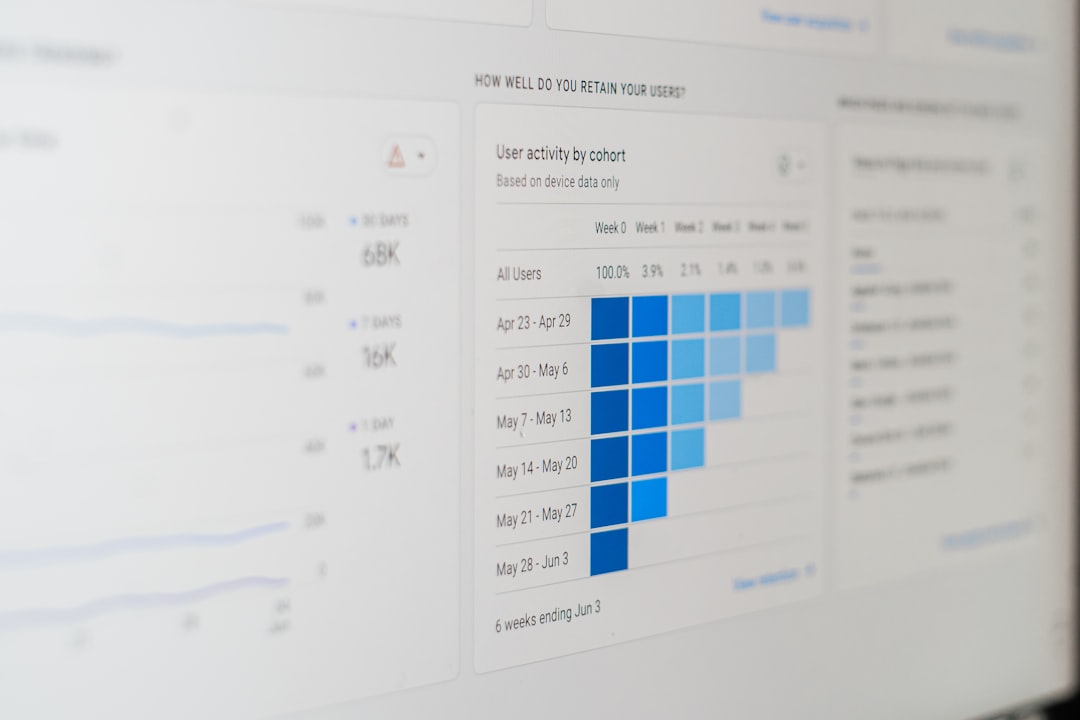
Google Analytics 4 has evolved into an event-driven analytics system, making it more comparable to Amplitude than previous Universal Analytics versions.
- Free core platform with scalable premium option (GA4 360)
- Cross-platform web and app tracking
- Predictive metrics powered by machine learning
- Seamless integration with Google Ads and BigQuery
GA4 works particularly well for organizations prioritizing marketing attribution alongside product analytics. While it may lack some of Amplitude’s advanced behavioral deep dives, its cost efficiency and ecosystem integration make it a strong alternative.
4. PostHog
PostHog stands out for being open-source and self-hostable. This makes it highly attractive to companies with strict privacy, compliance, or infrastructure needs.
- Self-hosting and cloud deployment options
- Built-in feature flags and experimentation tools
- Session recording and heatmaps
- Strong developer flexibility
For startups and enterprises alike, PostHog offers a unified product analytics stack that combines event tracking with qualitative insights.
5. Pendo
Pendo goes beyond analytics by blending product analytics with in-app guidance and user onboarding tools.
- User segmentation and behavioral tracking
- In-app messages and walkthroughs
- Product adoption metrics
- Net Promoter Score (NPS) tracking
This makes Pendo especially useful for companies focused on improving user onboarding and retention within SaaS platforms.
6. Adobe Analytics
Adobe Analytics caters primarily to large enterprises that require comprehensive digital intelligence solutions.
- Advanced customization and segmentation
- AI-driven anomaly detection
- Deep integration with Adobe Experience Cloud
- Robust reporting infrastructure
Though complex and typically more expensive, Adobe Analytics can replace Amplitude in large-scale enterprise environments requiring cross-channel analytics capabilities.
7. Matomo
Matomo is a privacy-focused analytics tool that can be hosted on-premise.
- Full data ownership
- GDPR-compliant architecture
- Heatmaps and session recordings available
- Customizable reporting dashboards
Organizations operating in strict regulatory environments often choose Matomo as a privacy-friendly alternative.
Comparison Chart of Amplitude Alternatives
| Tool | Best For | Key Strength | Hosting Options | Pricing Level |
|---|---|---|---|---|
| Mixpanel | SaaS & Apps | Advanced event analytics | Cloud | Mid to High |
| Heap | Product Teams | Automatic event tracking | Cloud | Mid |
| GA4 | Marketing & Web | Free and ecosystem integration | Cloud | Low to Mid |
| PostHog | Developers & Privacy | Open-source flexibility | Self-hosted / Cloud | Low to Mid |
| Pendo | SaaS Adoption | In-app user guidance | Cloud | High |
| Adobe Analytics | Enterprise | Deep customization | Cloud | High |
| Matomo | Privacy-focused Firms | Data ownership | Self-hosted / Cloud | Low to Mid |
How to Choose the Right Alternative
When comparing Amplitude analytics alternatives, decision-makers should evaluate several factors:
- Tracking Capabilities: Does the platform offer event tracking, session recordings, funnels, and cohorts?
- Ease of Implementation: Will engineering teams need to dedicate significant time to setup?
- Data Governance: Are compliance, data residency, and security requirements met?
- Scalability: Can the tool handle user growth without exponential costs?
- Integration Ecosystem: Does it integrate with CRM, marketing automation, data warehouses, and BI tools?

Balancing these considerations ensures that companies select a tool aligned with their product maturity stage and long-term roadmap.
Qualitative vs Quantitative Insights
While Amplitude emphasizes quantitative behavioral data, some alternatives combine both quantitative and qualitative analysis. For example:
- Session replays reveal user frustration points.
- Heatmaps highlight attention hotspots.
- In-app surveys capture direct user feedback.
Platforms like PostHog, Pendo, and Matomo often integrate these features directly, reducing the need for separate tools.
Cost Considerations
Pricing structures vary significantly among analytics platforms. Some charge based on tracked events, while others price according to monthly active users or feature tiers. Free tiers, such as GA4 or open-source deployments like PostHog and Matomo, help early-stage startups minimize expenses. Enterprise-focused tools such as Adobe Analytics and Pendo typically require custom quotes and larger investments.
Long-term scalability must be factored in. A lower entry cost may translate into high fees as user events scale. Transparent pricing models and predictable billing structures often become deciding factors.
Final Thoughts
Although Amplitude remains a powerful leader in event-based analytics, numerous alternatives offer compelling advantages depending on business requirements. From Mixpanel’s advanced behavioral tools to PostHog’s open-source flexibility and GA4’s marketing-centric ecosystem, the landscape is diverse and evolving. Organizations willing to define clear data goals, infrastructure needs, and budget boundaries can confidently select an analytics solution tailored to their growth strategy.
Frequently Asked Questions (FAQ)
1. Why would a company switch from Amplitude?
A company may switch due to pricing concerns, the need for self-hosting, simpler implementation, enhanced privacy compliance, or desire for additional features like heatmaps and session replay.
2. Is Mixpanel better than Amplitude?
Mixpanel and Amplitude offer similar core capabilities. The better choice depends on a company’s preference for interface, pricing structure, and specific reporting features.
3. What is the most affordable Amplitude alternative?
Google Analytics 4 and open-source tools like PostHog and Matomo tend to be the most affordable options, especially for small to mid-sized businesses.
4. Which analytics platform is best for privacy compliance?
PostHog and Matomo are strong choices for privacy-conscious organizations because they offer self-hosting and greater data control.
5. Can these alternatives handle enterprise-level traffic?
Yes. Mixpanel, Adobe Analytics, GA4 360, and Pendo are designed to scale for high-volume enterprise environments.
6. Do these tools require developer involvement?
Most sophisticated analytics platforms require at least initial developer setup. However, tools like Heap reduce ongoing engineering dependency through automatic event tracking.
By carefully comparing available features, scalability, and compliance alignment, organizations can successfully implement a powerful alternative to Amplitude and unlock deeper insight into user behavior.