
Modern data applications increasingly depend on graph-shaped, highly connected information: customers linked to products, transactions linked to rules, entities linked to constraints, and decisions linked to changing business context. RelationalAI Dovetail Join can be understood as a join execution approach designed for this kind of connected, constraint-heavy data. It helps a relational knowledge graph engine evaluate complex relationships efficiently by coordinating multiple inputs instead of blindly producing large intermediate results.
TLDR: RelationalAI Dovetail Join is a join strategy associated with efficient evaluation of complex relational and graph-style queries. Rather than treating joins as a simple chain of pairwise operations, it “dovetails” work across participating relations so candidate values can be narrowed earlier. This is especially useful when queries involve many predicates, shared variables, or graph-like patterns. In practical terms, it helps reduce unnecessary intermediate data and supports faster reasoning over connected datasets.
What RelationalAI Dovetail Join Means
In relational systems, a join combines rows from two or more relations when they satisfy a condition. Traditional database users often think of joins in SQL terms: an inner join between a customer table and an order table, or a join between products and suppliers. RelationalAI, however, works in a setting where data, logic, rules, and relationships may be expressed as a relational knowledge graph. The patterns being evaluated are often more complex than a simple two-table lookup.
Dovetail Join refers to an execution idea in which the system coordinates the evaluation of several join conditions together. The term “dovetail” suggests interlocking pieces. Instead of pushing all data from one relation into another and then into another, the engine can advance through candidate values in a more synchronized way. It attempts to discover matching combinations by using constraints from all relevant predicates as early as possible.
This matters because complex joins can explode in size. A query may involve several relations that share variables. If the system joins them in a poor order, it may generate millions of temporary combinations only to discard most of them later. Dovetail-style execution aims to avoid that waste by making the join process more selective from the beginning.
Why Join Strategy Matters in RelationalAI
RelationalAI is often used for applications that need to reason over interconnected data. Examples include supply chain optimization, financial controls, fraud detection, recommendation logic, entity resolution, and planning. These workloads typically involve many relationships, not just one-to-one mappings.
Consider a model that asks whether a supplier can fulfill an order under capacity, location, timing, compliance, and cost constraints. The answer may depend on multiple relations: suppliers, facilities, products, routes, contracts, calendars, and rules. Each relation contributes a piece of the final result. The query is not merely retrieving data; it is evaluating a network of conditions.
In such cases, the join algorithm can strongly affect performance. A weak strategy may materialize large intermediate tables. A smarter strategy can use available constraints, indexes, and variable bindings to reduce the search space. Dovetail Join is important because it represents the latter philosophy: it treats a join as a coordinated search across relations rather than a mechanical sequence of pairwise combinations.
The Basic Idea Behind Dovetailing
The easiest way to understand dovetailing is to imagine several sorted lists that must agree on a shared value. A naive approach might compare many values from the first list against many values from the second list, then compare the result against a third list. A dovetail approach instead advances through the lists in a coordinated fashion, looking for values that can satisfy all lists at once.
For example, suppose three relations all contain a variable representing a product identifier. The engine does not need to form every possible pair between the first two relations before consulting the third. It can use the shared product identifier to move through candidate values and keep only those that are plausible across all three relations. The more selective the constraints are, the more beneficial this can become.
In this sense, Dovetail Join is related to the broader family of multiway join strategies. Multiway joins evaluate several relations together, instead of strictly reducing a query to a sequence of binary joins. This can be particularly effective for graph queries, rule evaluation, and cyclic patterns where pairwise joins may create unnecessarily large temporary results.
How It Differs from a Traditional Pairwise Join
A traditional query plan often breaks a multi-relation query into a join tree. First, relation A joins relation B. Then that result joins relation C. Then the next result joins relation D, and so on. This can work very well for many workloads, especially when the optimizer chooses a good order and the data is indexed effectively.
However, the pairwise model can struggle when no single join order is clearly ideal or when many predicates constrain the same variables. A bad early join may create a bulky intermediate result. Even if later predicates eliminate most rows, the engine has already paid the cost of generating them.
Dovetail Join takes a different view. It can be described as a method that interleaves progress across relations. Rather than allowing one intermediate to grow too large before applying other constraints, it pulls constraints together earlier. The result is often a smaller candidate set and fewer wasted comparisons.
- Pairwise join: combines relations in stages, potentially creating intermediate results.
- Dovetail-style join: coordinates multiple relations around shared variables and constraints.
- Main advantage: fewer unnecessary candidates may be generated.
- Best fit: connected, graph-like, rule-heavy, or highly constrained queries.
A Simple Conceptual Example
Imagine a retailer wants to find products that satisfy three conditions: the product is in stock, it is eligible for promotion, and it can be shipped to a specific region. These facts might live in three relations:
in_stock(product)promotion_eligible(product)ships_to(product, region)
A pairwise plan might first join all in-stock products with all promotion-eligible products, creating a temporary list. Then it would join that list with shipping eligibility. If many products are in stock and promotion eligible, but only a small number ship to the target region, the intermediate list could be larger than necessary.
A dovetail approach can align the search around the shared product variable. It can check candidates against the three constraints in a coordinated manner. If a product fails the shipping condition early, there is no need to continue treating it as a strong candidate. In more complex cases, this principle can save significant work.

Why It Is Useful for Graph Patterns
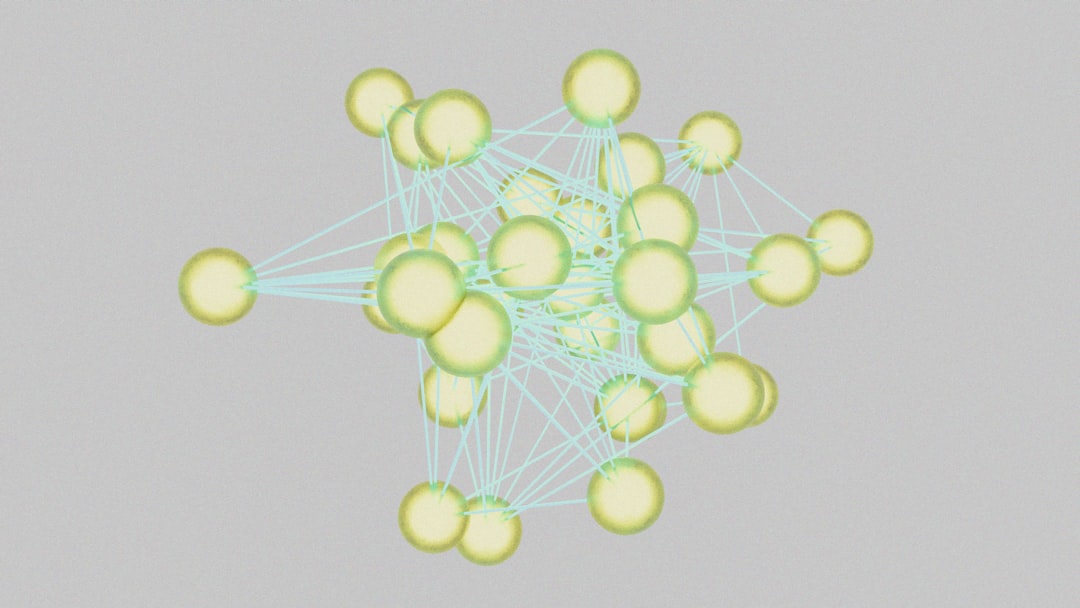
Graph-style queries often contain multiple edges that meet at shared nodes. For instance, a fraud model may look for accounts linked by devices, addresses, payment instruments, and transaction timing. A recommendation model may connect users, items, categories, similarity scores, and preferences. These queries are often not linear; they are shaped like triangles, stars, chains, or cycles.
In graph patterns, intermediate blowup is a common danger. A query may start with many possible paths, but only a few complete patterns satisfy all conditions. Dovetail Join can help by considering the whole pattern more intelligently. When variables appear in several predicates, each predicate can help restrict the others.
This is especially valuable in RelationalAI because rules and relationships are first-class parts of the model. A query may not simply traverse stored facts; it may also derive new facts from logic. Efficient join execution therefore supports not just retrieval, but reasoning.
Relationship to Relational Knowledge Graphs
A relational knowledge graph combines relational precision with graph-like connectivity and logical modeling. Data is represented as relations, but those relations can express entities, edges, attributes, constraints, and derived concepts. Queries can then ask sophisticated questions that combine stored data and inferred relationships.
In this environment, joins are central. Every relationship between two concepts is effectively a join opportunity. Every rule that combines conditions depends on matching values across relations. The more expressive the model becomes, the more important it is for the system to evaluate joins efficiently.
Dovetail Join fits naturally into this picture. It supports the evaluation of connected patterns without forcing the engine to treat every complex query as a brittle sequence of two-way joins. It helps the system preserve the declarative nature of the model: the model can state what should be true, while the engine chooses an efficient way to evaluate it.
Performance Benefits
The main potential benefit of Dovetail Join is reduced intermediate work. Since the join process can use several constraints together, many invalid candidates may be rejected earlier. This can improve speed and memory behavior, particularly when joins are selective or highly connected.
Another benefit is more stable performance for certain complex patterns. In pairwise plans, a single poor choice early in the join order can produce a large intermediate. Dovetail-style execution may reduce sensitivity to such choices by keeping multiple relations involved throughout the search.
Important performance advantages may include:
- Early pruning: candidates that cannot satisfy all predicates are discarded sooner.
- Lower memory pressure: fewer large temporary results may need to be stored.
- Better fit for multiway constraints: several relations can guide the search at the same time.
- Improved graph query behavior: cyclic and highly connected patterns may be handled more efficiently.

What Users Need to Know
For most users, Dovetail Join is not something that has to be manually written into every query. It is better understood as part of how an intelligent relational engine can execute declarative logic. The user defines relations, rules, and queries; the system decides how to evaluate them efficiently.
That said, model design still matters. Clear relations, appropriate keys, selective predicates, and well-structured rules can help the optimizer. A query that expresses constraints directly gives the engine more information to work with. Conversely, unnecessary broad relations or vague conditions may leave too much work for the execution layer.
Practical modeling habits can support efficient joins:
- Use meaningful predicates that expose important constraints.
- Avoid generating overly broad derived relations when a narrower rule would work.
- Represent shared variables clearly so relationships can be recognized.
- Prefer declarative rules that state the desired logic directly.
- Check performance patterns when models grow in size or complexity.
Common Misunderstandings
One misunderstanding is that Dovetail Join is simply another name for an ordinary inner join. It is not. The logical result may still be a join result, but the execution strategy is different. It focuses on how matching combinations are found.
Another misunderstanding is that it removes the need for optimization. Join strategy is powerful, but data shape, selectivity, indexing, and model structure still matter. No join algorithm can make an ambiguous or unnecessarily huge search space disappear completely.
A third misunderstanding is that dovetailing is only useful for graph databases. Its benefits are broader. Any relational workload with multiway predicates, shared variables, or complex constraints can potentially benefit from coordinated join evaluation.
Conclusion
RelationalAI Dovetail Join is best understood as an efficient, coordinated approach to evaluating complex joins in relational knowledge graph workloads. It helps avoid the inefficiency of producing large intermediate results when several predicates can jointly restrict the answer. By dovetailing work across relations, the engine can evaluate graph-like and rule-based patterns more effectively.
Its importance comes from the nature of modern connected data. As models become richer and more logical, joins become more central to computation. Dovetail Join supports that shift by helping the execution engine reason through relationships with less waste and more precision.
FAQ
What is RelationalAI Dovetail Join?
RelationalAI Dovetail Join is a join execution approach that coordinates multiple relations and constraints during query evaluation. It is designed to reduce unnecessary intermediate results and improve performance for complex relational or graph-like patterns.
Is Dovetail Join the same as a SQL join?
No. A SQL join describes the logical operation of combining rows that satisfy a condition. Dovetail Join refers more to the execution strategy used to find matching combinations efficiently, especially across multiple relations.
Why is it called “dovetail”?
The name suggests interlocking or coordinated movement. The join process advances across participating relations in a connected way, using constraints together rather than treating each join as an isolated step.
Where is Dovetail Join most useful?
It is most useful in workloads with many shared variables, graph patterns, rules, constraints, or cyclic relationships. Examples include fraud detection, optimization models, recommendations, and supply chain reasoning.
Does a user have to manually enable it?
In typical usage, it is best viewed as part of the query execution and optimization behavior of the system. Users usually focus on writing clear declarative models and queries, while the engine determines efficient execution strategies.
Does Dovetail Join guarantee faster performance?
It can improve performance in many suitable cases, but no strategy guarantees faster results for every workload. Data distribution, selectivity, model design, and query structure all influence the final performance.